
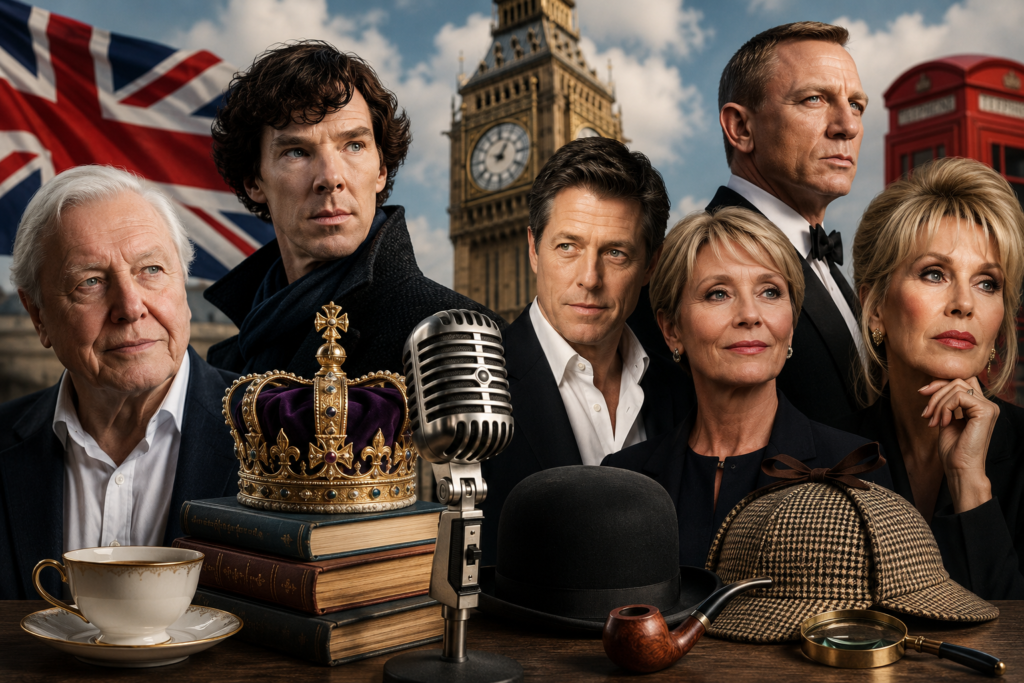
The Queen’s English: Why Received Pronunciation Still Captivates English Learners
By Outscore English
Have you ever watched a British documentary, listened to a royal speech, or enjoyed an episode of Sherlock and thought, “I wish I could speak English like that”?
What you’re hearing is often called the Queen’s English, formally known as Received Pronunciation (RP). For decades, RP has been considered one of the most prestigious and recognizable accents in the English-speaking world.
But what exactly is it, and should IELTS students try to learn it?
What Is Received Pronunciation (RP)?
Received Pronunciation is a traditional British accent that developed among the educated upper classes of England. Unlike regional accents such as Cockney, Scouse, or Geordie, RP is not tied to a particular city or region.
It is often associated with:
- Clear pronunciation
- Precise articulation
- Formal speech
- Broadcasting and public speaking
- Traditional British education
Although fewer people speak pure RP today, it remains highly respected and is still commonly heard in broadcasting, education, and professional environments.
Famous Speakers of the Queen’s English
Many well-known British celebrities naturally speak with accents that are close to Received Pronunciation.
Benedict Cumberbatch
Benedict Cumberbatch
Best known for portraying Sherlock, Cumberbatch’s speech is often cited as a textbook example of modern RP. His clear enunciation and sophisticated vocabulary make him an excellent listening model for advanced learners.
Hugh Grant
Hugh Grant
Hugh Grant’s relaxed but refined speaking style is instantly recognizable. His accent reflects the educated upper-middle-class English often associated with traditional RP.
Emma Thompson
Emma Thompson
Known for her articulate delivery and exceptional command of language, Emma Thompson demonstrates the elegance and clarity often linked to the Queen’s English.
Joanna Lumley
Joanna Lumley
Famous for her polished and incredibly clear speech, Lumley is often regarded as one of Britain’s most distinctive RP speakers.
David Attenborough
David Attenborough
If you’ve ever watched a nature documentary, you’ve probably heard one of the most admired voices in the English-speaking world. His calm, measured pronunciation makes him an excellent listening resource.
Daniel Craig
Daniel Craig
Although he adapts his accent for different acting roles, Craig’s natural speaking voice is close to mainstream modern RP.
Why Do Learners Like the Queen’s English?
Many international learners are drawn to RP because it is:
✅ Easy to understand
✅ Widely used in English learning materials
✅ Associated with professionalism
✅ Common in British universities
✅ Helpful for improving pronunciation clarity
For learners planning to study abroad in the UK, RP can also improve listening comprehension when interacting with university lecturers and academic speakers.
Is RP the “Best” British Accent?
Not necessarily.
Britain has a rich variety of accents, and every accent is equally valid. Today’s Britain celebrates regional identities far more than it did in the past.
Whether someone speaks with a London, Manchester, Liverpool, Scottish, Welsh, or RP accent, effective communication is what matters most.
The goal should never be to sound aristocratic—it should be to sound clear, confident, and natural.
Does Accent Matter in IELTS?
This is one of the most common questions we receive at Outscore English.
The short answer is: No, your accent does not affect your IELTS score.
IELTS examiners do not assess whether you sound British, American, Australian, South African, or Thai.
Instead, they assess:
Pronunciation
Can listeners understand you easily?
Intonation
Do you use natural stress and rhythm?
Clarity
Are your sounds produced clearly?
Connected Speech
Can you link words naturally when speaking?
A Thai student with a noticeable Thai accent can still achieve Band 8 or even Band 9 if their speech is clear and easy to understand.
In fact, many high-scoring IELTS candidates maintain their native accent while demonstrating excellent pronunciation.
Remember: IELTS rewards intelligibility, not imitation.
Podcasts and Shows to Improve Your British English
If you’d like to become more familiar with RP and modern British pronunciation, try these excellent resources:
Podcasts
🎙 Diary of a CEO
Hosted by Steven Bartlett, this podcast features long-form conversations with entrepreneurs, athletes, academics, and public figures. It provides exposure to a range of educated British accents.
🎙 The Rest Is History
Hosted by Tom Holland and Dominic Sandbrook, this podcast combines fascinating history with clear British pronunciation.
🎙 BBC Learning English
Perfect for English learners looking to improve vocabulary, listening skills, and pronunciation.
TV Shows
📺 Sherlock
One of the best examples of modern educated British English. Listen carefully to Benedict Cumberbatch’s pronunciation, vocabulary, and sentence structure.
📺 The Crown
Provides exposure to a variety of upper-class British accents and formal speech patterns.
📺 Downton Abbey
Excellent for hearing traditional RP alongside regional British accents.
📺 Nature documentaries narrated by David Attenborough
These are ideal for learners because of the slower pace, clear pronunciation, and academic vocabulary.
Final Thoughts
The Queen’s English remains one of the most recognizable accents in the world. While Received Pronunciation can be a useful model for improving clarity and listening skills, IELTS students should remember that achieving a high score is not about sounding British.
Focus on speaking clearly, expanding your vocabulary, improving fluency, and developing natural pronunciation.
At Outscore English, we help students build the skills that examiners actually assess—not simply imitate an accent.
After all, the goal isn’t to sound like the Queen.
It’s to outscore your competitors and communicate with confidence.